

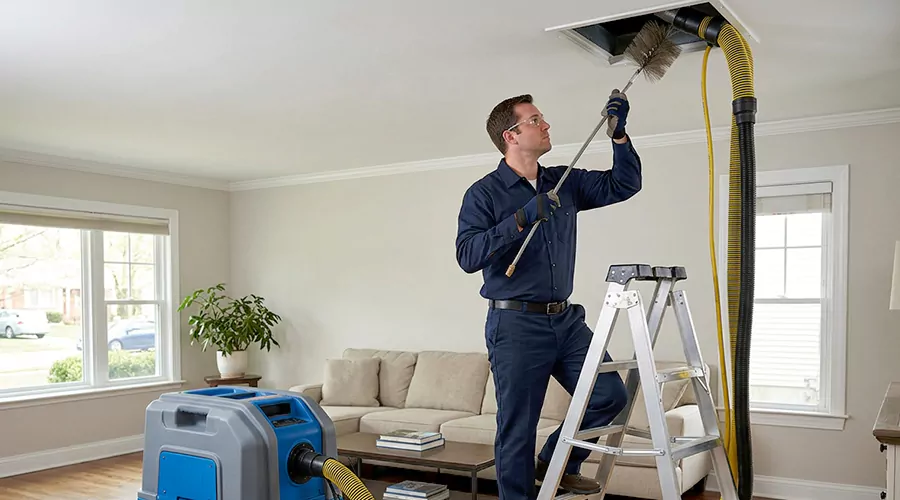
A ceiling vent cleaner removes dust from overhead air vent covers using a soft brush, microfiber cleaning head or vacuum attachment. Many cleaning tools have an extendable handle that allows you to reach ceiling openings from the floor. The cleaning head collects loose particles from the grille without requiring the entire vent cover to be removed.
Ceiling vents are common in homes with central heating and cooling systems. Because these openings are positioned above normal cleaning height, dust can remain unnoticed until visible deposits develop around the grille. A suitable cleaning tool makes it easier to maintain these surfaces without using unstable furniture or reaching awkwardly.
Different cleaning tools use different methods to collect dust. Some rely on microfiber material that holds particles against its fibers, while vacuum attachments use suction to remove debris. Understanding how these tools work helps you select a method that matches the vent's height and condition.
What Is a Ceiling Vent Cleaner?
A ceiling vent cleaner is a tool designed to remove dust from overhead HVAC grilles and nearby surfaces. Most household versions use an extendable pole with a soft cleaning head that can reach narrow openings. Other designs connect to a vacuum cleaner and use suction to collect loosened debris.
These tools are primarily intended for surface maintenance rather than cleaning concealed ductwork. They can remove dust from visible louvers and reduce deposits around the vent frame, but they cannot reach all internal HVAC components. The cleaning method depends on whether the tool uses microfiber contact or a vacuum attachment.
Some products are designed specifically for ceiling grilles, while others are general-purpose extension dusters that can be used on overhead vents. The most useful feature is a cleaning head that can reach the surface without applying excessive pressure. A lightweight tool is often easier to control when working above shoulder height.
How Does a Ceiling Vent Cleaner Remove Dust?
Ceiling vent cleaning tools remove dust by making contact with exposed surfaces or drawing loose material into a vacuum. The cleaning head reaches the grille openings and collects particles that have accumulated during normal HVAC operation. Different designs work better for different types of deposits.
Microfiber Cleaning Heads
Microfiber cleaning heads use fine synthetic fibers to collect particles from the grille surface. The fibers help hold loose dust as the cleaner moves across the vent. Some microfiber dusters also rely partly on electrostatic attraction, depending on their material and design.
A flexible cleaning head can follow the shape of the grille and reach along exposed louvers. Because the material is soft, it is less likely to scratch painted finishes than a stiff brush. However, heavy pressure can still bend thin metal louvers or loosen damaged vent covers.
Microfiber tools work best when the dust is dry and loosely attached. Sticky deposits may require a damp cloth or a more thorough cleaning method. Cleaning the duster head after use prevents collected material from being carried to another surface.
Soft-Bristled Brushes
A soft-bristled brush removes dust through gentle mechanical contact. The bristles pass over the grille surface and loosen particles trapped near edges or narrow openings. Some ceiling cleaning brushes have angled heads that help reach the underside of overhead vents.
The main advantage of a brush is its ability to reach textured surfaces where a flat cloth may not make full contact. However, loosened dust can fall into the room unless it is collected with a vacuum or captured by another cleaning material.
Brushes should be used gently around adjustable louvers. Excessive force may change the direction of the airflow vanes or damage a decorative grille. Soft bristles are preferable for ordinary household deposits.
Vacuum Attachments
Vacuum-based ceiling cleaners use suction to collect loose particles while a brush attachment loosens them from the surface. The cleaning head is connected to a vacuum hose, sometimes through an extension tube designed for overhead use.
This method is useful when a grille has a noticeable coating of dry dust. Because the particles enter the vacuum as they are disturbed, fewer deposits are likely to fall onto furniture or flooring. A vacuum with suitable particle filtration can also help reduce the release of fine material during cleaning.
The attachment must fit the vent safely without forcing its way between internal components. Household vacuum tools should remain near the accessible opening rather than being pushed deep into the duct.
What Types of Ceiling Vent Cleaners Are Available?
Ceiling vent cleaners come in several designs that suit different cleaning conditions. Telescoping dusters are commonly used for light surface maintenance, while vacuum attachments can collect heavier loose deposits. The best choice depends on ceiling height and whether the vent cover can be reached comfortably.
| Cleaner Type | How It Works | Best Use |
|---|---|---|
| Telescoping microfiber duster | Collects dust through contact with fine fibers | Light buildup on accessible ceiling grilles |
| Extension brush | Loosens particles from narrow openings | Dust trapped around louvers |
| Vacuum brush attachment | Uses suction while gently brushing | Heavier loose dust on vent covers |
| Flexible angled cleaning head | Reaches around exposed grille edges | Vents with angled or decorative openings |
| Damp microfiber cloth | Wipes attached surface residue | Washable grilles within safe reach |
A telescoping duster is generally easier to use from the floor, especially when the ceiling is relatively high. Vacuum extensions can provide better particle collection but may be heavier and harder to control overhead. The weight of the tool matters because repeated overhead movements can cause fatigue and reduce accuracy.
A ceiling vent cleaner should not be confused with an air duct cleaning machine. Surface cleaning tools work on accessible grilles, while internal duct cleaning equipment is designed for enclosed duct passages and HVAC components.
How Do You Use a Ceiling Vent Cleaner?
Using a ceiling vent cleaner involves preparing the area and collecting dust from exposed surfaces with controlled movements. The HVAC system should be switched off before cleaning to prevent airflow from scattering loose particles. The goal is to remove deposits without damaging the grille or surrounding ceiling.
Step 1. Turn Off the HVAC System
Switch the heating or cooling system off at the thermostat and wait until the blower has stopped. Cleaning while air is moving can scatter dust that has been loosened from the grille. It can also make the cleaning process less controlled because particles may move through the opening.
Check whether the vent is a supply opening or a return grille before beginning. The difference may affect where dust has collected, although the surface cleaning method is similar. Do not attempt to clean internal electrical equipment through a ceiling opening.
Step 2. Prepare the Area Below the Vent
Move lightweight items away from the area directly beneath the grille. If the ceiling vent is above a bed or upholstered furniture, protect the surface with a washable sheet. This provides a simple way to collect particles that may fall during cleaning.
Wear eye protection when working beneath dusty overhead surfaces. Position yourself so the vent is not directly above your face when possible. A clear working area also makes it easier to control an extension pole without striking nearby objects.
Step 3. Adjust the Cleaning Tool
Extend the pole only as far as needed to reach the grille comfortably. A handle that is extended farther than necessary may become difficult to control, particularly when the cleaning head is angled.
Check that the attachment is secured before raising the tool. Use a soft head that matches the grille's shape and avoid pressing firmly against the cover. The cleaning tool should touch the surface gently rather than pushing against the ceiling.
Step 4. Clean the Grille Surface
Begin at one edge of the vent and move the cleaning head slowly across the exposed openings. Gentle strokes help collect particles without bending the louvers. If using a microfiber duster, inspect the head occasionally to make sure it is collecting dust rather than spreading accumulated material.
When using a vacuum attachment, keep the brush in contact with accessible surfaces and allow the suction to remove loose particles. Avoid forcing the attachment through the grille openings. Repeat the process only where visible deposits remain.
Step 5. Clean Around the Vent Frame
Dust may collect along the outer edges of the grille or on nearby ceiling paint. Use the soft cleaning head to remove loose material without applying pressure to the surrounding surface.
Dark streaks may not respond to dry dusting because they can contain particles attached to paint or moisture-related residue. Avoid vigorous scrubbing because it can remove paint or change the appearance of the ceiling. Cleaning products should not be sprayed directly into overhead HVAC openings.
Step 6. Inspect the Results
Once the visible dust has been removed, examine the grille from a safe position. Check whether the openings are clear and whether any attached deposits remain. If the cover appears loose or damaged, do not apply additional pressure with the cleaning tool.
Clean or replace the disposable cleaning head according to its instructions before using it elsewhere in the home. Any dust that falls to the floor can be removed with a vacuum or damp cleaning method. Restore HVAC operation after the area has been cleaned.
Can a Ceiling Vent Cleaner Remove Dust From Inside Air Ducts?
A ceiling vent cleaner can remove dust from the grille and the immediately accessible opening, but it cannot clean an entire duct system. Most household tools are designed for surface contact rather than reaching concealed duct sections. Attempting to push them farther inside may damage internal materials.
The difference is important because HVAC ductwork often includes bends and connections that cannot be reached from a ceiling register. Flexible duct sections may contain delicate inner liners, while some rigid ducts have insulation attached to their interior surfaces. Aggressive brushing can damage these materials and create additional debris.
A lightly dusty ceiling grille does not establish that the duct system contains harmful contamination. Dust can collect on vent covers because of normal airflow and surrounding room conditions. Internal cleaning should be considered only when there is a specific reason to investigate deeper deposits.
Why Do Ceiling Vents Develop Heavy Dust Buildup?
Ceiling vents collect particles because air moves across their surfaces during HVAC operation. Some dust settles on the exposed grille while fine material can accumulate along surrounding paint. The amount of buildup depends on indoor particle levels and the direction of airflow.
Airflow Around Supply Grilles
Supply vents direct conditioned air into occupied rooms. Some grille designs send air across the ceiling, which can influence where particles settle over time. Fine dust may collect near the outer edge and gradually form visible streaks.
These deposits do not automatically mean that dust is blowing out of the duct. Particles already circulating in the room may contribute to the staining as air moves across nearby surfaces.
Dust on Ceiling Return Grilles
A ceiling return grille draws indoor air toward the HVAC system. As air enters the grille, dust can settle on the edges before reaching the filter location. This may make return grilles appear dirtier than nearby supply openings.
A heavily dusty return grille should be cleaned before the material covers a substantial portion of its openings. However, ordinary surface dust does not prove that deeper ductwork needs cleaning.
Condensation Near Cold Openings
Cold supply grilles can sometimes develop condensation when indoor humidity is high. Moisture helps dust adhere to the surface, producing deposits that are more difficult to remove with a dry cleaning head.
Repeated condensation should be investigated because it may affect surrounding drywall or paint. A dry duster can remove loose dust, but it cannot resolve moisture conditions that cause stains to return.
When Does a Ceiling Vent Need More Than Surface Cleaning?
Some ceiling vents require additional attention because of the amount of debris or the condition of the surrounding materials. Light surface dust is normally manageable with a household cleaning tool. More serious problems involve moisture or visible damage that cannot be corrected by wiping the grille.
| Vent Condition | What It Indicates | Appropriate Response |
|---|---|---|
| Light dry dust | Normal surface accumulation | Use a soft duster or vacuum attachment |
| Dust trapped around louvers | Deposits in narrow grille openings | Use a soft brush attachment |
| Sticky surface residue | Attached particles on the cover | Wipe suitable material with a damp cloth |
| Dark stains near ceiling paint | Particle deposits or moisture | Investigate the staining pattern |
| Persistent condensation | Excess moisture near the opening | Identify the moisture source |
| Loose or damaged grille | Cover may not remain secure | Avoid applying pressure until corrected |
| Debris extending inside the duct | Possible internal contamination | Assess the source and extent |
Ceiling grilles located near bathrooms or kitchens may require more frequent surface inspection because moisture and airborne residues can make deposits harder to remove. However, a bathroom exhaust fan grille is not the same as a central HVAC supply vent. Exhaust fan covers may have clips or electrical components that require a different cleaning procedure.
What Are the Common Mistakes When Using a Ceiling Vent Cleaner?
Overhead cleaning requires greater control than cleaning a register at floor level. Applying excessive pressure can loosen the cover or damage the surrounding ceiling. Poor tool selection may also spread particles instead of collecting them.
Avoid these mistakes:
- Using a stiff brush on delicate louvers. Thin metal openings can bend when too much pressure is applied.
- Extending the pole farther than necessary. An excessively long handle can become difficult to control.
- Cleaning while the HVAC blower is running. Moving air may scatter loosened dust.
- Spraying liquid cleaner upward. Excess moisture can enter the duct or damage ceiling materials.
- Pushing attachments deep into the opening. Internal duct liners can be damaged by aggressive contact.
- Using unstable furniture for extra height. Chairs and stacked objects are not suitable work platforms.
- Scrubbing dark ceiling stains aggressively. Excessive friction can damage paint without removing the underlying cause.
- Ignoring loose or damaged mounting hardware. A poorly secured grille may shift when contacted by the cleaner.
Another mistake is using a contaminated cleaning head across several vents without washing or replacing it. A heavily loaded duster may deposit particles on the next surface rather than collecting them. Inspecting the tool between vents helps maintain cleaning effectiveness.
Is a Ceiling Vent Cleaner Better Than Removing the Vent Cover?
A ceiling vent cleaner is useful for routine maintenance because it allows you to remove visible dust without taking down the grille. Removing the cover may provide better access when material has accumulated on its underside. The right method depends on how much cleaning is needed and whether the vent can be reached safely.
| Cleaning Method | Main Advantage | Main Limitation |
|---|---|---|
| Telescoping duster | Reaches high grilles from the floor | May leave attached residue |
| Vacuum extension | Collects loose particles directly | Can be awkward to handle overhead |
| Damp cloth | Removes attached surface deposits | Requires safe physical access |
| Removing the grille | Allows cleaning of both sides | Requires more work and safe access |
| Internal duct cleaning | Addresses confirmed deeper contamination | Not suitable as routine surface cleaning |
For a lightly dusty ceiling vent, a telescoping microfiber duster may be sufficient. If the grille contains sticky residue or significant deposits on its underside, removal can provide more complete access when it can be done safely. Avoid removing overhead covers if their weight or mounting arrangement makes them difficult to control.
How Much Does Ceiling Vent Cleaning Cost in 2026?
The cost of ceiling vent cleaning depends on whether you are removing light surface dust or addressing confirmed contamination inside the HVAC system. Household cleaning tools are generally a smaller expense than specialized ductwork cleaning. However, a single dusty ceiling grille rarely justifies an entire system cleaning.
A reusable extension duster can be used across multiple vents without removing the covers. Existing vacuum attachments may also be suitable when they can reach the grille safely. The equipment cost depends on the tool design and whether you already own compatible cleaning supplies.
For comparison, reported 2026 U.S. whole-system duct cleaning costs commonly range from approximately $271 to $509 for typical projects. Some estimates place per-vent cleaning charges around $25 to $50, but these figures generally concern duct-cleaning work rather than simply wiping a removable cover. The scope of work should always be distinguished before comparing costs.
When Should You Call a Professional?
Professional attention becomes appropriate when a ceiling vent is too difficult to access safely or when significant debris extends beyond the grille. Persistent moisture and suspected biological contamination also require investigation. These conditions may involve concealed HVAC components or damaged duct materials that cannot be evaluated with a household extension duster.
A qualified HVAC technician can inspect accessible duct connections and check for airflow restrictions. If deeper contamination is confirmed, specialized cleaning equipment may be used to remove material while controlling the release of particles into occupied rooms. The technician can also evaluate whether a damaged grille or moisture problem requires repair.
Routine surface cleaning and internal duct cleaning serve different purposes. A clean vent cover does not prove the entire system is clean, while a dusty grille does not prove deeper contamination exists. The decision should depend on observable conditions rather than a fixed cleaning schedule.
How Can You Keep Ceiling Vents Cleaner for Longer?
Ceiling vents remain cleaner when airborne dust is controlled and visible deposits are removed before they become heavy. A soft extension tool makes routine maintenance easier because it reduces the need to remove overhead covers. Proper HVAC filter maintenance also helps control particles moving through the air circulation system.
Inspect Ceiling Vents Regularly
Check ceiling grilles during normal household cleaning and remove visible deposits before they form thick layers. A monthly visual inspection is a useful starting point for busy homes, although actual cleaning frequency should depend on the amount of buildup. Use gentle movements and clean the duster head between rooms when necessary. Regular inspection also helps you notice unusual staining or condensation before it becomes widespread.
Maintain Air Filters
Inspect the HVAC filter approximately every 30 days during periods of heavy system operation and replace it according to the manufacturer's instructions. Correct filter size matters because gaps can allow particles to bypass the filter material. Avoid adding unapproved filter material over ceiling supply vents because the additional restriction may interfere with airflow. Maintaining proper filtration helps control dust entering downstream equipment, although it will not eliminate every particle circulating inside the home.
Reduce Dust and Moisture Sources
Vacuum carpets regularly and clean household surfaces using methods that collect particles rather than spreading them into the air. Protect HVAC openings during dusty renovation work while the system is off and remove the coverings before restarting operation. Investigate condensation around ceiling grilles because repeated moisture can make deposits difficult to remove and damage nearby paint. Controlling the source is more effective than repeatedly cleaning stains that continue to return.
Conclusion
A ceiling vent cleaner works by collecting dust from overhead grilles with a microfiber head or vacuum attachment. These tools are useful for surface maintenance but cannot clean an entire duct system. Gentle cleaning helps protect louvers and nearby ceiling finishes. Persistent debris or moisture may require professional evaluation. This week, inspect your ceiling vents and remove visible dust using a tool you can control safely.